EnviGlobe

EnviGlobe services

Risk & Climate

EnviGlobe conducts quantitative risk assessments (QRA) for activities ranging from small establishments to mega projects, including climate change risk assessment. Outputs support impact assessments and define mitigation measures needed to meet environmental standards.

Answer first

Risk and climate services quantify what can go wrong and what the changing climate will do to an asset, then convert that analysis into mitigation, design change, adaptation and disclosure that a board, regulator or lender can act on.

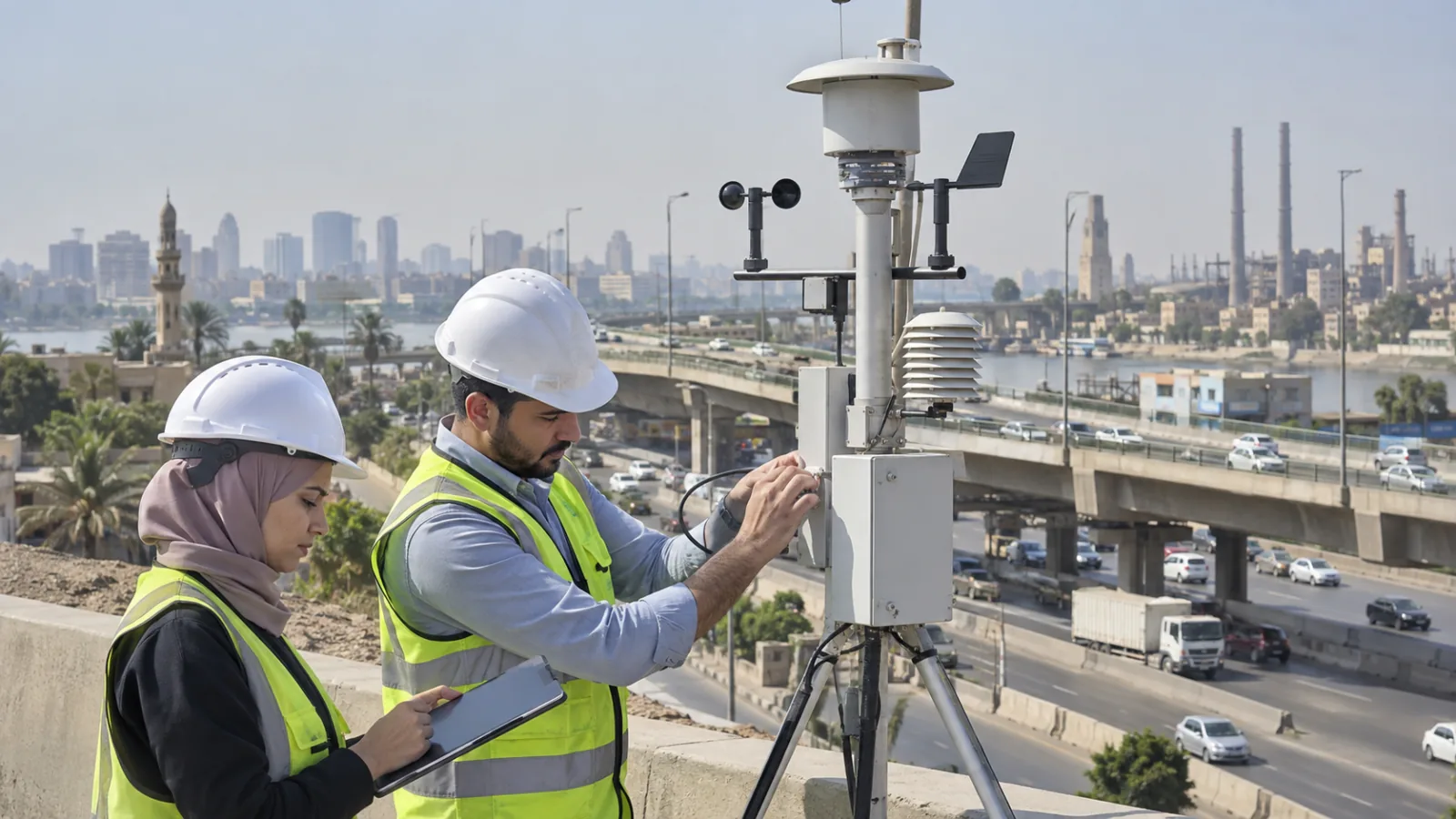
Engineers assessing climate exposure of infrastructure
Illustrative image only; it does not depict the actual project.

Scope of work

What we deliver

  • Quantitative risk assessment for activities from small establishments to major industrial projects.
  • Hazard identification and systematic review workshops covering process, storage and handling operations.
  • Consequence modelling for release, fire, explosion and toxic dispersion scenarios.
  • Individual and societal risk calculation, risk contours and comparison against recognised tolerability criteria.
  • Land use and separation distance assessment for facilities sited near populated or sensitive areas.
  • Climate change risk assessment covering both physical hazards and transition risk.
  • Physical climate hazard screening for heat, water stress, flooding, coastal inundation, wind and extreme events.
  • Scenario analysis using recognised climate pathways to test asset and portfolio resilience over defined horizons.
  • Greenhouse gas emissions evaluation across project stages, with corrective action plans where emissions exceed benchmarks.
  • Adaptation and resilience measures, prioritised by exposure, consequence and cost of intervention.
  • Climate-related disclosure support aligned with TCFD-based structures and IFRS S2.

When to use it

  • A facility handles hazardous substances and the risk to people on and off site has never been quantified.
  • A permit, lender or insurer requires a quantitative risk assessment before approval.
  • Siting or separation distances are being challenged for a facility near housing or sensitive receptors.
  • The organisation must disclose climate-related risks and has no analysis behind the narrative.
  • Assets are exposed to heat, flooding, water stress or coastal hazards and capital planning needs to reflect that.
  • Emissions across project stages exceed sector benchmarks and a corrective plan is required.

Information needed

  • Process description, inventories, storage conditions and substance data for hazardous materials.
  • Plot plans, layout drawings, population distribution on site and land use in the surrounding area.
  • Existing safety studies, incident history, and current protective and mitigation systems.
  • Asset locations, elevations, criticality and replacement value for climate exposure screening.
  • Historical climate and hydrological data, and any site-specific flood or drainage studies.
  • Production, energy and fuel data where greenhouse gas evaluation is in scope.

Decision outputs

  • Quantified individual and societal risk compared against tolerability criteria rather than described qualitatively.
  • Risk contours that make siting, layout and separation decisions defensible.
  • A prioritised mitigation set targeting the scenarios that actually drive the risk figure.
  • Physical and transition climate exposure identified by asset, hazard and time horizon.
  • Scenario results that can be used directly in climate-related disclosure.
  • An adaptation plan sequenced by exposure and by the cost of acting now against acting later.

How we work

01

Identify

Establish the hazards, assets, receptors and time horizons in scope, and agree the criteria the results will be judged against.

02

Quantify

Model consequences and frequencies, or screen climate hazards by asset and scenario, to produce comparable risk measures.

03

Evaluate

Compare against tolerability criteria and benchmarks, and identify which scenarios and assets dominate the result.

04

Act and disclose

Define proportionate mitigation and adaptation measures, and structure the output for board, regulator and lender reporting.

Relevant sectors

Multi-sector experience.

  • Oil, gas, petrochemical and chemical storage
  • Industrial facilities near populated areas
  • Banks, insurers and investment portfolios
  • Ports, coastal assets and transport infrastructure
  • Utilities, water and power networks
  • Real estate portfolios and large mixed-use developments

Frequently asked questions

What does a quantitative risk assessment produce that a qualitative one does not?

A number that can be compared against a criterion. Qualitative assessment ranks scenarios relative to each other, which is useful for prioritising attention but cannot answer whether risk at a given location is tolerable. A quantitative assessment combines frequency and consequence to produce individual and societal risk measures that can be tested against recognised criteria, compared between design options, and defended to a regulator, insurer or lender.

What is the difference between physical and transition climate risk?

Physical risk is the effect of the changing climate on assets and operations: heat, water stress, flooding, coastal inundation, storm damage and the disruption that follows. Transition risk is the effect of the response to climate change: carbon pricing, border measures, regulation, technology shifts, customer requirements and financing conditions. They have different time profiles and different owners inside an organisation, and analysing only one usually understates the exposure.

Which climate scenarios should we use?

Disclosure frameworks generally expect at least one scenario consistent with a low-carbon transition and at least one higher-warming scenario, so that both transition and physical exposure are tested. The commonly referenced pathways come from the IPCC and from published transition scenarios used in financial analysis. What matters more than the specific set is that the choice is stated, the time horizons are relevant to the asset life, and the same scenarios are used consistently between cycles.

How relevant is climate risk analysis for Egyptian assets?

Directly relevant, because the dominant physical hazards in the region are heat, water availability and coastal exposure, all of which affect operating cost, asset life and workforce productivity rather than only causing occasional damage. Transition risk is also becoming concrete for exporters through carbon border measures and customer requirements. The analysis is most useful where it identifies the small number of assets and hazards that drive the exposure.

Does climate risk analysis feed directly into disclosure?

It should. Climate-related disclosure expects governance, strategy, risk management, and metrics and targets, with scenario analysis supporting the strategy section. If the analysis is commissioned separately from the disclosure, the two usually diverge and the narrative ends up unsupported. We structure the output so the same analysis supports the board discussion, the capital plan and the published disclosure without being rewritten three times.

How does greenhouse gas evaluation fit into risk work?

Emissions performance is a transition risk driver in its own right. Where emissions across project stages exceed sector benchmarks, the exposure shows up as carbon cost, border adjustment liability, financing conditions and customer pressure. Evaluating emissions by stage identifies where the intensity actually sits, which is what makes a corrective action plan targeted rather than generic. The same data supports disclosure and product-level carbon reporting.

When should risk assessment be carried out in a project?

Early enough to change the design. Siting, layout, separation distances, inventory decisions and inherent safety measures are the most effective risk controls and are largely fixed in early design. A risk assessment run after layout freeze can usually only recommend added protective systems, which cost more and deliver less. For existing facilities the trigger is normally a change to the process, the inventory, the surroundings or the regulatory expectation.
Discuss your project requirements with our team.

We will help define the right scope and next practical step.

Request a consultation