
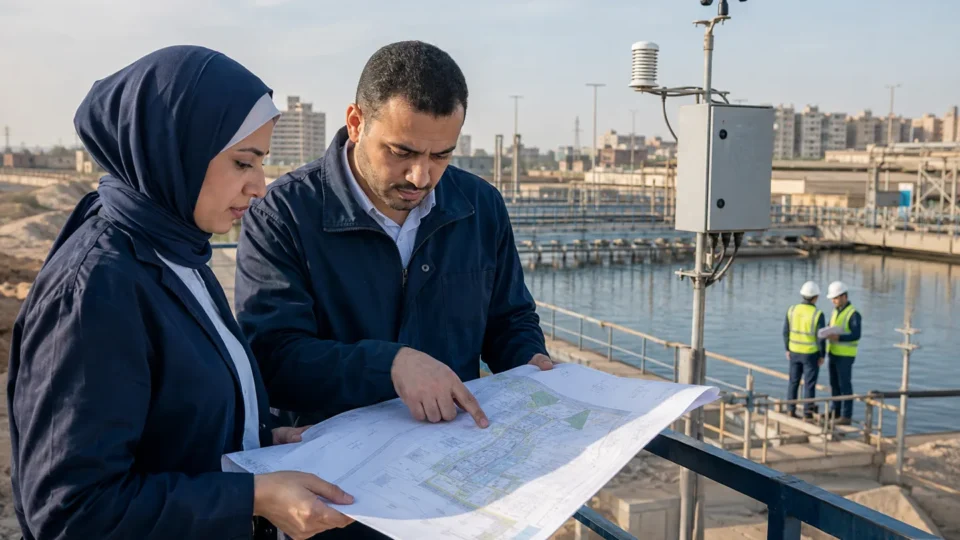
Environmental impact assessment in Egypt should begin before project design is fixed: screen the activity, confirm the required category and authority route, define credible baseline studies, assess alternatives and impacts, and carry approved commitments into construction and operation.
The right output is not simply an approval document. It is a defensible basis for design, permitting, stakeholder communication and implementation.
Who should use this guide, and what decision does it support?
Project developers, industrial companies, design teams, investors and lenders planning a new facility, expansion or material process change in Egypt.
Before work begins, agree the question the assessment or review must answer and who will rely on the result. A design decision, lender report and regulatory submission need different levels of detail. Defining the use case early prevents teams from collecting large amounts of information that do not change the decision.
A practical implementation sequence
- Describe the project, alternatives, site and schedule accurately.
Set the purpose, boundary and decision timetable in writing. Name the people who will supply information and approve the result, and record any legal, lender or client framework that changes the scope.
- Confirm classification, submission route and any sector-specific approvals.
Build a source register before analysis begins. Check dates, units, ownership and completeness so later calculations and findings use consistent information rather than convenient but incompatible files.
- Define the study area, receptors, baseline methods and seasonal needs.
Test important claims against more than one form of evidence where practical. Site observation, interviews, measurements and operating records often reveal whether a documented control is actually used.
- Assess construction, operation, cumulative and reasonably foreseeable impacts.
Evaluate significance against the agreed decision criteria and show assumptions or sensitivity clearly. Separate observed facts, calculations, professional judgement and information that remains unavailable.
- Set mitigation, monitoring, responsibilities and evidence of implementation.
Turn the result into an implementable output. Assign owners, deadlines, resources, monitoring indicators and objective closure evidence, then retain the approved version for future review.

Data and evidence required
The conclusion becomes more reliable when boundaries, data sources, responsibilities and quality checks are documented from the start. Possessing a file is not enough: record its period, unit, owner, review method and any adjustment made.
- Site ownership and location information
- Process flow, material, utility and emissions data
- Baseline measurements and receptor mapping
- Alternatives record and design assumptions
- Stakeholder, permit and commitments registers
Maintain a simple evidence register that connects each finding to its source, identifies unavailable information and explains how uncertainty was handled. This reduces review time and makes the conclusion easier to update when design, operations or requirements change.
How management should use the result
A decision-ready output distinguishes issues that prevent a decision, actions that must close before a defined milestone and improvements that can be managed through operations. Every action should have an owner, date, resources and objective closure criterion instead of a general instruction to “comply with requirements”.
Put a short executive answer first, with the analysis and evidence underneath. Management, finance, legal and technical readers can then use the level they need while the full reasoning remains traceable and reviewable.
Common mistakes to avoid
- Starting after key design choices are irreversible
- Using generic baseline data with no site relevance
- Treating mitigation as vague recommendations
- Losing approval commitments during procurement and construction
A recurring mistake is to confuse a completed report with effective implementation. Quality is demonstrated when the output informs a decision, changes a control or closes a gap with evidence—not by page count or table density.
Frequently asked practical questions
When should the work begin?
Start before design freeze, financing approval or a submission deadline. Early work gives teams time to resolve missing data and change options at lower cost.
Is a document review sufficient?
Not for most material assignments. Documents show the intended system; interviews, site observation and operating records test whether controls work in practice.
How should incomplete data be handled?
Record the gap and its effect, use a conservative estimate where justified and define how better data will be obtained. Do not hide uncertainty inside a final number that appears more precise than the evidence supports.
What makes an output reviewable?
Clear boundaries, traceable sources, retained versions, disclosed assumptions, internal review and an identified approval owner.
Checklist before sign-off
- Project description matches the proposed design
- Methods and limitations are transparent
- Material impacts and alternatives are traceable
- Responsibilities, timing and monitoring are explicit
- Final commitments enter the ESMS and contracts
This checklist does not replace project-specific legal or contractual advice. Confirm the applicable framework for every assignment and obtain appropriate advice where exposure is material.