
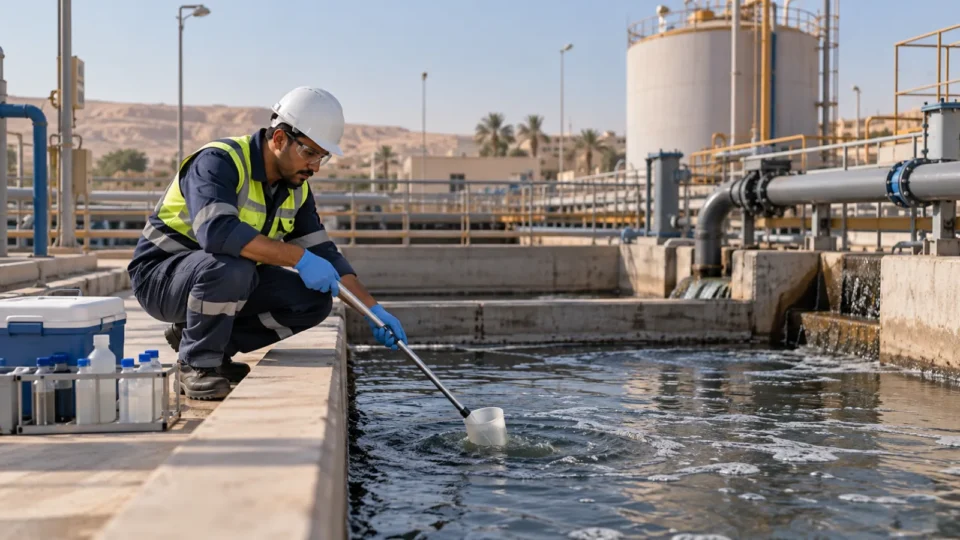
An industrial wastewater monitoring plan should answer four questions: what leaves the facility, where it goes, whether treatment works under normal and abnormal conditions, and what the team does when a result is out of control. A laboratory certificate on its own does not answer all four.
Start with a process and discharge map, then set sampling locations, parameters, methods and frequency against the facility’s actual permit and receiving route. Assign an owner for every result and a documented response to exceedances or missing data.
Who needs this plan?
This guide is for plant managers, EHS teams and engineering leads in Egypt who discharge industrial effluent to a sewer, a surface-water body or another authorised destination, or who operate a treatment plant and consider reuse. It helps them commission a monitoring programme and judge whether the resulting data are fit for compliance and operational decisions. It does not set a universal legal limit: the applicable permit, receiving authority, sector and discharge route must be checked for each facility.
Map the water before selecting tests
Walk the production line from intake to final discharge. Record process-water inputs, cleaning and cooling streams, chemicals, intermittent batches, stormwater connections, treatment stages, bypasses and sludge handling. A site drawing should identify each material stream and the person who can confirm it in operation. Meter readings and production schedules help explain why a concentration measured on a quiet day may not represent peak loading.
Separate three types of point: the source point that diagnoses a process problem; the inlet and outlet of a treatment stage that show whether it is working; and the final compliance point required by the relevant approval. Sampling only the last point can demonstrate an outcome but may not reveal why a failure occurred. Sampling everywhere without a decision purpose creates cost without clarity.
Design a representative monitoring programme
- Confirm the framework. Put the current permit, consent conditions, receiving-network requirements and any lender or customer commitments in one register. Mark the source and effective date of each requirement.
- Choose parameters from the process. Basic indicators may include flow, pH, temperature, suspended solids and oxygen-demand measures. Metals, oils, nutrients or other constituents should be considered where raw materials and operations make them relevant. Do not copy a generic laboratory package into every facility.
- Match timing to variability. Map production shifts, cleaning cycles, maintenance, seasonal changes and batch releases. Agree whether a grab or composite sample will answer the question, and whether continuous instruments are needed or required for this discharge.
- Specify quality controls. Document where the sample is taken, container and preservation requirements, time to analysis, calibration, chain of custody, laboratory method and detection limit. Set a clear rule for invalid or missed samples.
- Link the result to action. Define an internal trigger, escalation owner, investigation steps, resampling decision, regulator or network notification where applicable, and evidence needed to close the issue.
Egypt’s Environmental Affairs Agency publishes industry self-monitoring guidance and wastewater guidance that can inform the facility-specific design. The guide should support—not replace—the conditions that actually apply to the site.
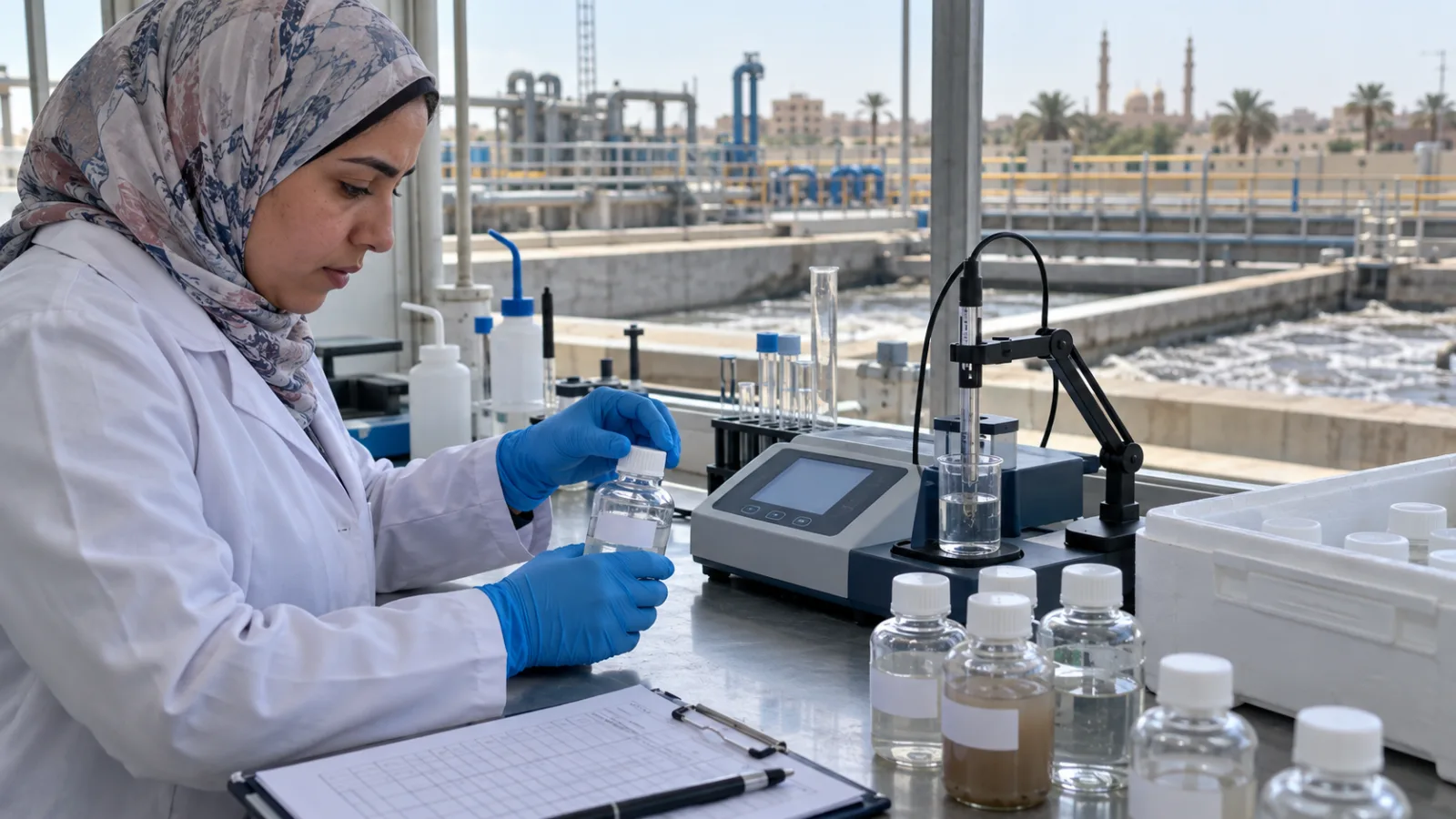
Use the data to test treatment performance
A treatment plant is not a black box with a compliant outlet. Compare inlet and outlet loads, not concentrations alone, when flow changes materially. Watch for changes in pH, chemical dosing, aeration, sludge removal and equipment availability that precede poor results. Put the trend beside production output and water use. A sudden dilution of a sample can make the outlet concentration look better while total pollutant load or operating risk remains unresolved.
Where reuse is proposed, define the intended use first, then assess treatment reliability, storage, cross-connection control, worker exposure and the permissions that apply. “Treated” does not by itself mean suitable for any reuse application. Keep reuse performance separate from discharge compliance so one claim does not obscure the other.
What should the monthly evidence pack contain?
- A current discharge-point map, permit and requirement register.
- Sampling schedule and any deviations, with the reason for each missed event.
- Field sheets, chain-of-custody records, laboratory reports and instrument calibration evidence.
- Flow and production context for each result; relevant inlet and outlet trends.
- An exceptions log showing investigation, owner, action, deadline and verified closure.
These records make a monitoring result reproducible. They also let managers ask a useful question: is the system stable, or was the last compliant result a lucky snapshot?
Common failures and how to avoid them
One convenient sampling point: verify it represents the actual final discharge and cannot be bypassed. Unexplained laboratory numbers: record the operating state and sample method. No response owner: assign escalation before an exceedance occurs. Outdated permit assumptions: review the plan when production, chemicals, treatment or discharge destination changes. Confusing a consultant’s report with operating control: make the facility team responsible for daily decisions and evidence.
Frequently asked questions
How often should an Egyptian factory sample?
There is no defensible single answer for every factory. Start with the applicable permit and receiving authority, then consider process variability, risk and any relevant sector or lender requirement. A change in process or a poor result may justify additional diagnostic sampling.
Can one good laboratory result prove compliance?
It proves only what that valid sample measured at that place and time. Confidence comes from representative timing, documented methods, traceable records and trends across operating conditions.
When is continuous monitoring useful?
It may be required for particular facilities or discharge arrangements, and it can be valuable when conditions change quickly. Its instruments still need calibration, data checks and a response procedure; continuous bad data are not better than occasional good data.
Next step for your facility
Ask your team to place the current discharge map, permit conditions, three recent laboratory reports and treatment operating logs side by side. If they cannot explain how each sample relates to a process state and a corrective decision, the programme needs redesign. EnviGlobe can support the diagnostic review through its environmental and social consulting service and broader engineering work. For the wider compliance context, see our guide to environmental compliance audits.
Official references
- Egyptian Environmental Affairs Agency: industrial wastewater guidance and monitoring
- Egyptian Environmental Affairs Agency: industrial self-monitoring guides
- IFC / World Bank Group: Environmental, Health and Safety Guidelines
Technical guidance, not a substitute for site-specific permit review or legal advice. Prepared by EnviGlobe Technical Team.