EnviGlobe

EnviGlobe services

Engineering & Waste

Engineering and waste management services connect practical system design, technical review, supervision, commissioning, and compliant waste handling.

Answer first

Engineering and waste management services cover the practical end of a project: designing collection and treatment systems that work at real throughput, writing specifications that can be tendered, reviewing what contractors propose, supervising installation, and verifying that what was built performs as specified.

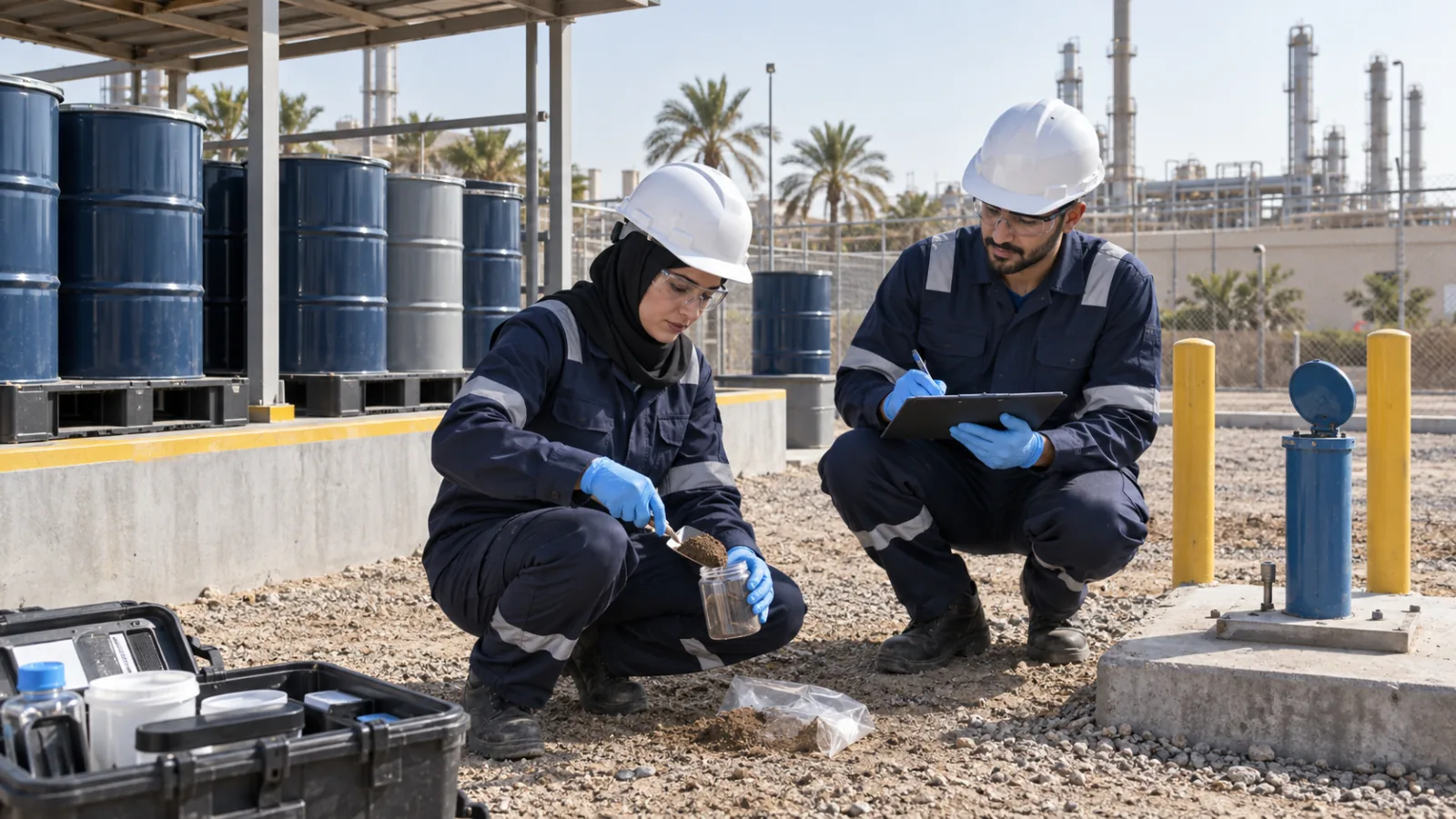
Industrial waste management inspection in Egypt
Illustrative image only; it does not depict the actual project.

Scope of work

What we deliver

  • Waste characterisation and quantification by stream, source and seasonal variation as the basis for any system design.
  • Design of solid waste management systems, including collection, transfer, sorting, treatment and disposal arrangements.
  • Collection logistics, container sizing, route and transfer station planning matched to actual generation rates.
  • Material recovery, composting and organic treatment options appraisal against local market and offtake reality.
  • Hazardous waste segregation, storage, labelling, transport and disposal arrangements aligned with regulatory requirements.
  • Technical specifications assessment and preparation of tender documentation for waste and environmental plant.
  • Independent technical evaluation of industrial facilities, proposals and vendor claims before commitment.
  • Engineering supervision of project installations, including inspection, hold points and non-conformance management.
  • Systems installation verification, commissioning supervision and performance testing against the specification.
  • Waste management plans and operating procedures for construction sites and operating facilities.

When to use it

  • A facility or development needs a waste management system designed rather than a contractor default arrangement accepted.
  • Vendor proposals differ substantially and an independent technical view is needed before award.
  • Hazardous waste is generated and current storage, transport or disposal arrangements may not meet requirements.
  • Plant has been installed but never formally commissioned or performance tested.
  • An industrial facility is being acquired and its waste and environmental infrastructure needs technical evaluation.
  • A waste management plan is required as a permit, tender or lender condition.

Information needed

  • Waste generation data by stream, with quantities, composition and seasonal or production-linked variation.
  • Site layout, available space, access constraints and utility availability for any proposed plant.
  • Existing collection, storage and disposal arrangements, including contractor agreements and disposal routes.
  • Permits, manifests and disposal records for hazardous and non-hazardous streams.
  • Design drawings, specifications and vendor documentation for any equipment under review.
  • Operating philosophy, staffing and maintenance capability that the system will have to work within.

Decision outputs

  • A system design sized on measured generation rather than assumed per-capita or per-tonne factors.
  • Tender-ready technical specifications that can be priced and enforced.
  • An independent technical opinion on vendor proposals, with the basis of comparison made explicit.
  • Inspection and commissioning records that evidence what was installed and how it performed.
  • A compliant hazardous waste handling arrangement from point of generation to final disposal.
  • Operating procedures and responsibilities that the site can actually run without external support.

How we work

01

Characterise

Quantify and classify the waste streams, and establish the real generation profile including peaks and seasonality.

02

Design and specify

Develop the system concept, appraise options against local offtake and operating reality, and write enforceable specifications.

03

Procure and review

Evaluate proposals on a common technical basis, and test vendor claims against the specified duty.

04

Supervise and verify

Inspect installation against hold points, supervise commissioning, and confirm performance against the specification before handover.

Relevant sectors

Multi-sector experience.

  • Industrial and manufacturing facilities
  • Municipalities and integrated waste programmes
  • Real estate, mixed-use and hospitality developments
  • Oil, gas and petrochemical operations
  • Healthcare facilities and laboratories
  • Construction projects and industrial zones

Frequently asked questions

Why does waste characterisation matter before designing a system?

Because generation figures taken from literature or from another site are frequently wrong by a wide margin, and every downstream decision inherits the error. Container sizing, vehicle numbers, transfer capacity, treatment line throughput and contract volumes all follow from it. An oversized system wastes capital and runs inefficiently at part load; an undersized one fails visibly within months. A short characterisation exercise is almost always cheaper than either outcome.

How is hazardous waste handled differently?

Hazardous waste requires classification, segregation at the point of generation, compatible and contained storage with labelling, documented transfer to licensed transporters, and disposal at facilities authorised to receive that waste type, with records retained throughout the chain. Egypt regulates waste management through dedicated legislation and a national regulatory authority, and mixing hazardous with general waste normally converts the whole quantity into a hazardous stream, with the cost consequences that implies.

What does independent technical evaluation add before award?

It establishes whether competing proposals are actually comparable. Vendors quote against different assumptions on feed composition, availability, utility consumption, residue handling and guarantee conditions, so headline prices often describe different scopes. An independent review normalises the comparison, tests the performance guarantees against the specified duty, and identifies where a low price is being achieved by transferring risk or cost to the operating phase.

Is commissioning really necessary if the plant appears to run?

Appearing to run and meeting the specified duty are different things. Commissioning verifies performance against the contract under defined conditions and creates the record that makes a guarantee enforceable. Plants accepted without it commonly underperform on throughput, utility consumption or residue quality, and by the time that becomes clear the contractual position has weakened considerably. Commissioning is also where operating staff learn the plant properly.

Can recycling or composting be made economic in the Egyptian market?

Sometimes, and the determining factor is usually offtake rather than technology. A sorting line or composting facility only works financially if there is a reliable buyer for the recovered material at a workable price and quality specification. We appraise options against the actual local market for the outputs, transport distance and quality requirements, because a technically sound facility with no offtake becomes a storage problem rather than a recovery solution.

What should a construction waste management plan contain?

It should identify expected streams and quantities by project phase, define segregation arrangements and on-site storage, name the licensed contractors and disposal routes for each stream, set responsibilities for site staff and subcontractors, specify record keeping and manifest retention, and define inspection and reporting. A plan that does not name the disposal route or assign responsibility is a document rather than a control, and it is usually the first thing a site audit exposes.
Discuss your project requirements with our team.

We will help define the right scope and next practical step.

Request a consultation