What is the difference between a preliminary assessment and a site investigation?+
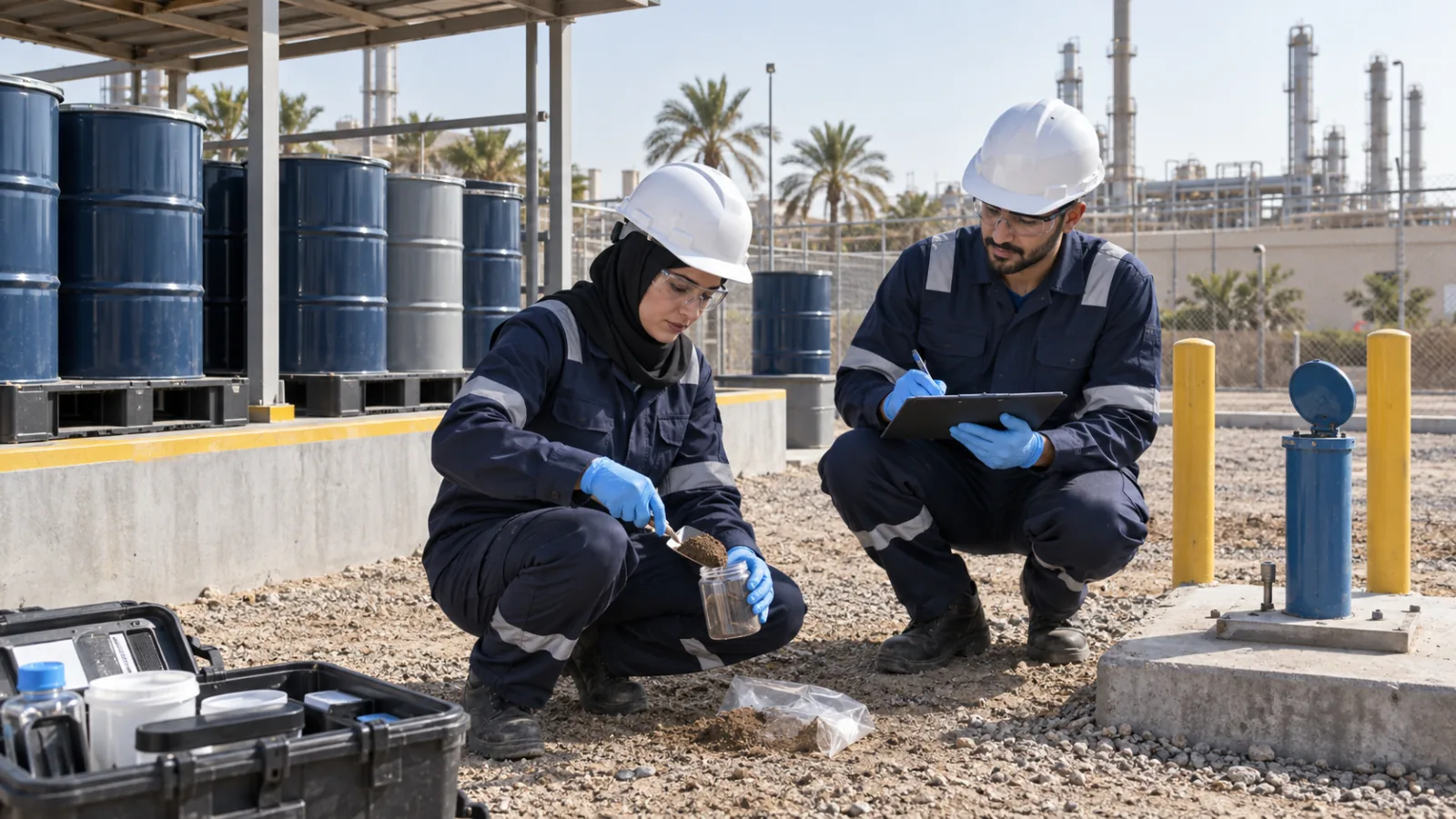
A preliminary assessment is largely a desk and walkover exercise: it reviews history, previous uses, incidents, layouts and visible evidence to identify credible sources and decide whether intrusive work is justified. A site investigation is physical sampling and analysis to test whether the suspected contamination is actually present and to what extent. Running the investigation without the preliminary stage usually means sampling in the wrong places at the wrong depths.
How are cleanup targets decided?+
Targets are derived from risk: what is present, how it can move, who or what could be exposed, and what the site will be used for. Generic screening levels are a first filter, not an objective. A site returning to industrial use with no groundwater pathway and no nearby receptors will carry different targets from the same contamination beneath planned housing. Deriving targets against the intended use is what keeps remediation proportionate and defensible.
How long does remediation take?+
It depends far more on the technique and the contaminant than on the quantity. Excavation of a defined shallow hotspot can be completed in weeks. In situ treatment and groundwater recovery are measured in months to years because they depend on subsurface conditions and mass transfer. Monitored natural attenuation is measured in years by design. The options appraisal should make this trade-off explicit, because programme is often the binding constraint in a transaction.
Can a transaction proceed before remediation is complete?+
Frequently, yes. What a transaction needs is a quantified and bounded liability rather than a finished remedy. Once extent is delineated and a costed remedial strategy exists, the parties can allocate that liability through price adjustment, indemnity, escrow or a retained obligation. The situations that block transactions are the ones where extent is unknown, because an unbounded liability cannot be priced by either side.
What is involved in decommissioning underground storage tanks?+
Typically emptying and cleaning, degassing, removal or in situ decommissioning, inspection of the tank and associated pipework for evidence of loss, and investigation of the surrounding soil and, where relevant, groundwater. Tank pits and pipe runs are the usual locations of historical release, so closure investigation at that stage is considerably cheaper than discovering impact later beneath a completed development.
How is closure actually demonstrated?+
Through validation: confirmation sampling at locations and depths agreed in advance, analysed for the contaminants of concern, and compared against the cleanup objectives set at the outset. The closure report should set out the objectives, the works performed, the validation data, any residual contamination left in place, and any ongoing monitoring or use restrictions. Works completion records alone do not demonstrate closure and are usually rejected on review.
What if contamination extends beyond the site boundary?+
This changes the problem from a site issue to a liability and stakeholder issue. Off-site migration typically triggers notification obligations, requires access agreements with neighbouring landowners to investigate, and may involve receptors outside the client control. It needs to be identified early precisely because the delays are procedural rather than technical. Defining the downgradient extent is part of characterisation, not an optional extension to it.